Poverty is not merely an economic limitation; it is a multidimensional phenomenon ranging from housing and health to social participation and psychological well-being. This sample report, prepared with Academetrica QUALI, analyzes the perception of poverty through an interpretative qualitative research lens.
The analysis explores the experience of poverty through these core dimensions:
- Definitions of Poverty: Access to basic needs and low standards of living.
- Indebtedness Dynamics: Psychological and economic impacts on quality of life.
- Coping Strategies: Models of savings, labor, and intra-family solidarity.
- Emotional Reflections: Analysis of dominant emotions such as sadness, fear, and anger.
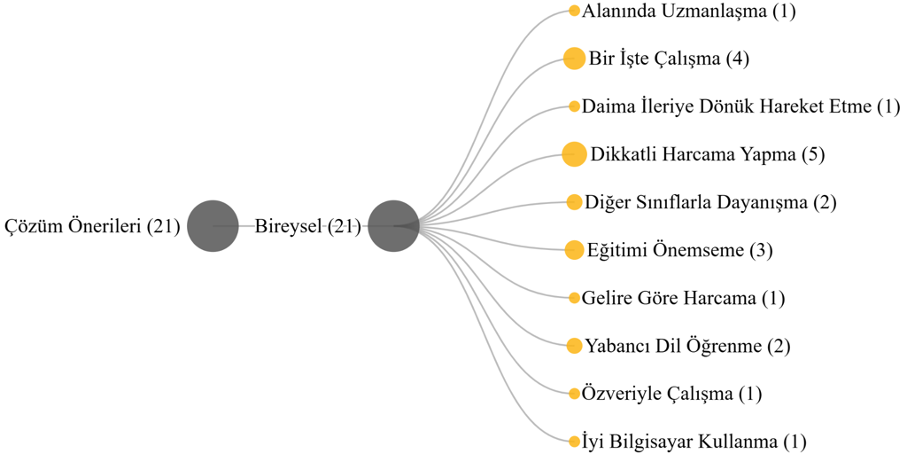
- Proposed Solutions: Individual dedication and structural public policy approaches.
Visualizing Complex Qualitative Data
To ensure transparency in the qualitative analysis process, thematic differences between participant groups are revealed through Code Matrices. The Code Portrait and Code Circle models enhance analytical integrity by visualizing conceptual density and dominant themes within the dataset.
Guided by the thematic analysis steps of Braun and Clarke, this study utilizes Code Hierarchies to transform hidden patterns and relational structures into concrete evidence.
Fig 1. Poverty Perception Code Circle
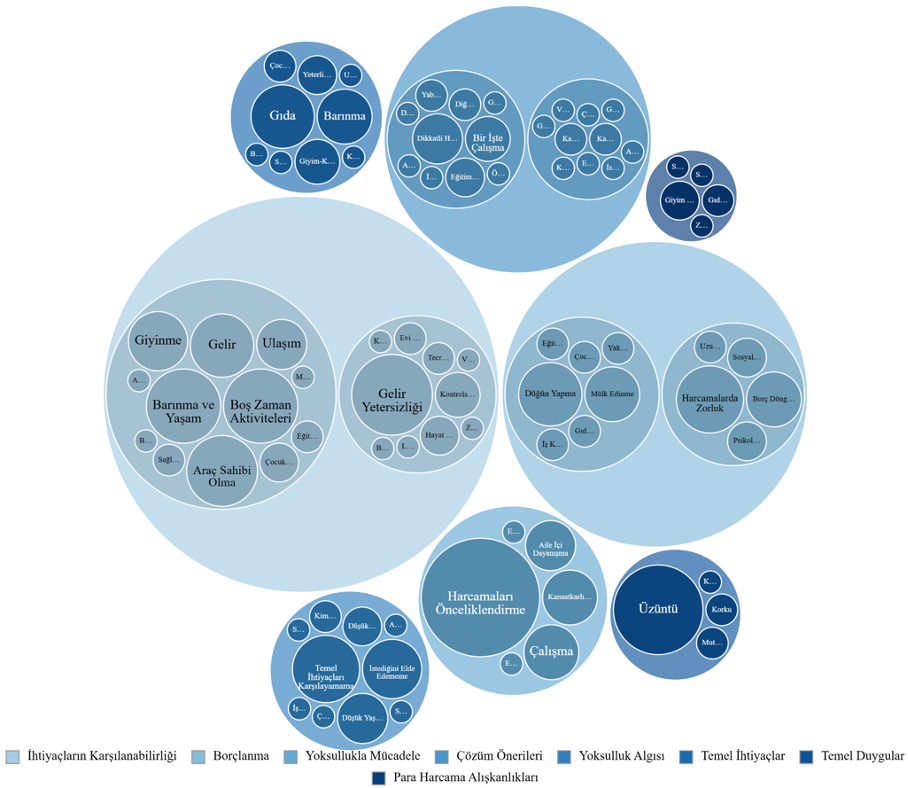
Fig 2. Solution Proposals Code Tree